Peddi Controversy: Director Apologises and Promises Changes After Backlash
The makers of Peddi have responded to mounting criticism surrounding the portrayal of Janhvi Kapoor’s character, with director Buchi Babu Sana issuing a public apology and confirming that changes will be made to portions of the film. The move comes just days after the Telugu action drama, headlined by Ram Charan and Janhvi Kapoor, hit cinemas on June 4 and sparked widespread debate among audiences, critics and social media users.
The controversy has quickly evolved beyond a routine discussion about a film’s creative choices. Instead, it has become part of a broader conversation about the representation of women in mainstream commercial cinema, with many viewers questioning whether certain storytelling conventions continue to have a place in an industry increasingly shaped by changing audience expectations.
Peddi Controversy Sparks Widespread Discussion
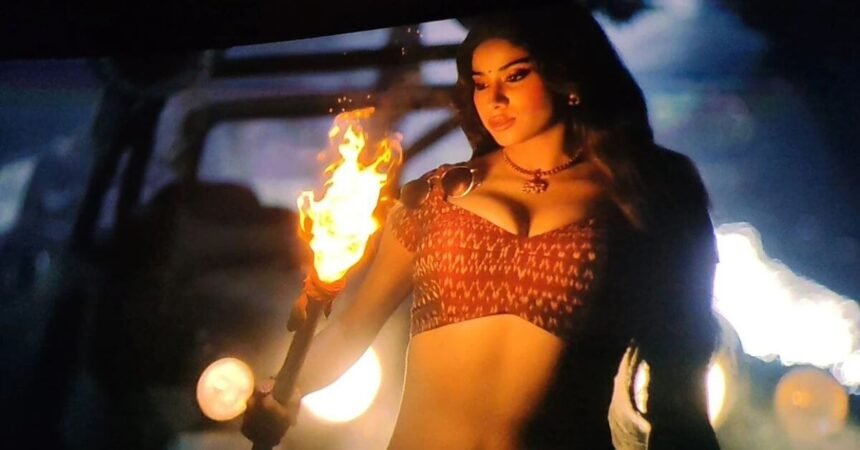
Soon after its release, Peddi found itself at the centre of intense online criticism. Viewers raised concerns about the way Janhvi Kapoor’s character was written and presented on screen, arguing that several scenes focused heavily on her physical appearance while offering limited narrative depth. Others criticised moments they felt reflected outdated gender dynamics and romanticised behaviour that many modern audiences consider problematic.
As conversations gained momentum across social media, criticism extended beyond individual scenes. Many viewers argued that the film reflected a larger pattern within commercial cinema, where female characters often receive substantial screen time but are given little influence over the story itself. The debate resonated strongly because it touched on an issue that has repeatedly surfaced in discussions around major star-driven productions over the past decade.
The growing criticism also attracted attention from film commentators and industry observers, who noted that audience reactions today are increasingly shaped by expectations of stronger female representation and more nuanced storytelling. What may once have been accepted as a standard commercial formula is now being examined more closely by viewers who expect greater accountability from filmmakers and studios.
Buchi Babu Sana Responds to Audience Feedback
Facing the backlash, director Buchi Babu Sana released a detailed statement addressing the concerns. In his message, he emphasised that cinema should entertain, inspire and connect with audiences, adding that it should never leave viewers feeling uncomfortable or disrespected. Acknowledging the criticism directly, he said the team had carefully listened to audience feedback and taken the concerns seriously.
Sana stressed that there had never been any intention to objectify or disrespect female characters in the film. At the same time, he recognised that audience perception matters and said the filmmakers respected the sentiments being expressed by viewers. In a significant development, he confirmed that the production team had reviewed the criticism and decided to modify the portions of the film that had generated controversy.
The director also reflected on the evolving relationship between cinema and its audience. According to Sana, storytellers have a responsibility to remain aware of changing social attitudes and cultural sensitivities. He reiterated his belief that women should be represented with dignity and respect on screen and stated that the team remains committed to creating stories built around strong and meaningful characters.
Criticism Focused on Janhvi Kapoor’s Characterisation
While the controversy has generated widespread attention, much of the criticism has focused specifically on the treatment of Janhvi Kapoor’s character rather than her performance. Viewers argued that her role contributes little to the central narrative and functions largely as a supporting element within the hero’s journey.
Several social media users questioned visual choices that they believed placed disproportionate emphasis on the character’s appearance. Others argued that the writing limited her agency and reduced her importance within the larger story. As the discussion intensified, many audience members expressed disappointment that a contemporary film released in 2026 was still relying on characterisation methods they viewed as outdated.
Reviews of the film echoed some of these concerns. Critics noted that the romantic subplot involving Kapoor’s character often interrupted the narrative momentum and failed to add meaningful depth to the overall story. Some reviewers went further, suggesting that removing significant portions of her track would have little impact on the film’s core plot, a criticism that fuelled further discussion online.
A Bigger Conversation About Women in Commercial Cinema
The reaction to Peddi has highlighted an issue that extends well beyond a single film. For many observers, the controversy has become a case study in the continuing tension between commercial filmmaking traditions and changing audience expectations.
An opinion piece published following the film’s release argued that actresses frequently experience a striking contrast between performance-driven roles in some films and heavily stylised portrayals in large-scale commercial entertainers. The article suggested that while women are often more visible than ever in mainstream cinema, visibility alone does not guarantee meaningful representation. It questioned whether female characters are truly being seen as individuals with agency or merely serving as visual elements within stories primarily centred on male protagonists.
The debate has also drawn attention to the commercial realities of the industry. Critics argue that filmmakers often continue to rely on familiar formulas because they remain financially successful. Supporters of reform, however, believe audience reactions to films such as Peddi demonstrate that viewers are increasingly willing to challenge narratives they consider regressive or out of touch with contemporary values.
What Happens Next for Peddi?
With Buchi Babu Sana confirming that revisions will be made, industry attention is now focused on how those changes will be implemented and whether they will satisfy audience concerns. Public acknowledgements of criticism are not uncommon, but direct commitments to alter a film after release remain relatively rare, making the development particularly noteworthy.
For Peddi, the controversy has shifted the conversation from box office performance to questions of representation, storytelling responsibility and audience influence. The film’s future reception may depend not only on the promised changes but also on whether viewers believe the concerns raised have been addressed in a meaningful way.
Regardless of the outcome, the discussion surrounding Peddi has already become one of the most significant entertainment debates of the year. It reflects a growing reality within Indian cinema: audiences are no longer simply consuming stories. They are actively questioning how those stories are told, who gets represented, and whether long-standing industry practices still align with the expectations of modern viewers.