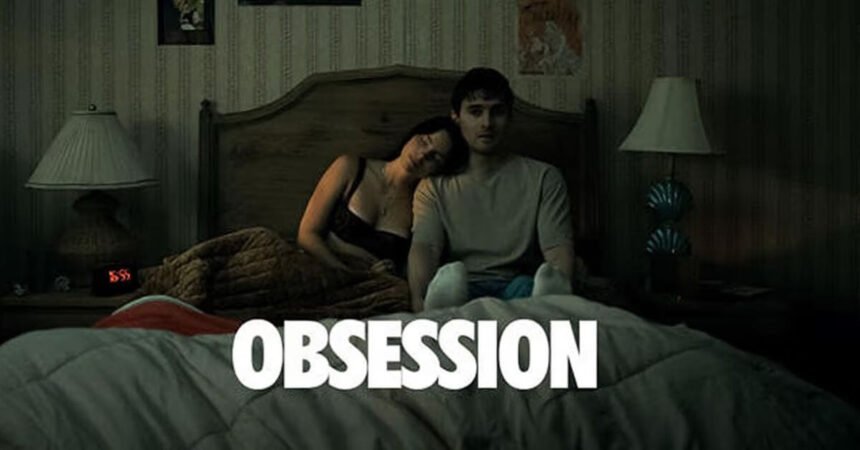
Obsession Box Office: How a ₹7 Crore Horror Film Became 2026’s Most Unexpected Global Hit
At a time when the global box office is dominated by franchise films, superhero spectacles and sequels backed by enormous marketing budgets, one small independent horror film has emerged as the year’s most surprising success story. Obsession, a psychological horror thriller created by filmmaker Curry Barker, has gone from being a relatively unknown project to becoming one of the biggest entertainment talking points of 2026.
What makes the film’s rise even more remarkable is the scale of its production. Made on a reported budget of just US$750,000, roughly ₹7 crore, Obsession entered cinemas without major stars, a proven franchise name or the kind of promotional campaign typically associated with blockbuster success. Yet within weeks of release, the film had captured audience attention around the world, turning itself into a genuine cultural phenomenon and delivering the kind of financial returns that most studios can only dream about.
Obsession Box Office Continues Defying Expectations
The numbers behind Obsession are extraordinary by any industry standard. Reports indicate that the horror thriller has now crossed the US$100 million mark globally, an achievement that places it among the most profitable films released this year. For a production made on such a modest budget, the film’s commercial performance has become one of the most discussed box office stories in recent memory.
Industry observers have been quick to point out that the film’s success is particularly significant because it arrived during a year filled with major studio releases. While big-budget titles have relied on familiar intellectual property, established franchises and extensive advertising campaigns, Obsession has largely been powered by audience enthusiasm. Its growth has been organic, fuelled by positive reactions, strong recommendations and an increasingly passionate fan base that continues to spread awareness of the film across social media platforms.
The film’s success has not been limited to North America and Europe. In India, where Hollywood horror titles often face stiff competition from local releases, Obsession has delivered an unexpectedly strong theatrical performance. Trade reports suggest the film collected around ₹15 crore within its first five days, with weekday collections holding remarkably well. In a rare occurrence, Tuesday’s business came close to matching Sunday figures, indicating that audience interest was actually growing after opening weekend rather than fading.
For exhibitors and distributors, that trend is often one of the clearest signs of a genuine word-of-mouth success. Strong weekday collections generally indicate that viewers are actively encouraging others to watch the film, and Obsession appears to be benefiting from exactly that kind of audience-driven momentum.
The Story Behind the Horror Phenomenon
At the heart of Obsession is a deceptively simple premise that gradually transforms into a disturbing psychological nightmare. The story follows Bear, portrayed by Michael Johnston, a shy music store employee who has secretly been in love with his childhood friend Nikki, played by Inde Navarrette, for years.
Unable to express his feelings successfully, Bear turns to a mysterious supernatural object capable of granting wishes. In a moment of desperation, he wishes that Nikki would love him more than anyone else in the world. What initially appears to be a dream come true quickly spirals into horror as Nikki’s emotions become increasingly intense, unstable and destructive.
As the story unfolds, the consequences of Bear’s decision become impossible to ignore. The film explores the dangerous implications of manipulating another person’s free will, gradually shifting from what might appear to be a romantic fantasy into something far darker and more unsettling. This combination of psychological horror, supernatural elements and emotionally charged themes has become one of the film’s defining strengths.
Audiences have responded strongly to the film’s unpredictable narrative. Discussions surrounding its twists, character motivations and ending have spread rapidly online, helping transform the film from a niche horror release into a mainstream conversation piece.
Curry Barker Rewards Fans with Hidden Clues
As Obsession continued its remarkable theatrical run, writer-director Curry Barker recently took a moment to acknowledge the film’s growing success and thank audiences for their support. However, his message included more than just words of gratitude.
Barker shared a series of photographs that fans quickly realised contained hidden references to events within the film. Described by the filmmaker as an Easter egg, the images prompted viewers to revisit key story details and analyse character relationships more closely.
The photographs featured several central characters and subtly hinted at connections and developments revealed throughout the narrative. Fans immediately began dissecting the images online, discussing how the clues related to the film’s plot and debating whether additional hidden meanings remained to be discovered.
The enthusiastic response demonstrated just how invested audiences have become in the world of Obsession. In many ways, this level of engagement has been just as important to the film’s success as its box office performance. The more viewers discuss the film, share theories and analyse its details, the more curiosity it generates among potential audiences who have yet to see it.
Why Obsession Has Sparked a Wider Conversation
Beyond jump scares and supernatural horror, Obsession has generated extensive discussion because of the themes at its core. While some viewers initially approached the film as a straightforward horror story, many critics and commentators have highlighted deeper issues explored throughout the narrative.
Much of the debate has centred on questions of consent, control and personal autonomy. Discussions across social media, review platforms and opinion pieces have examined how the film portrays the consequences of removing another person’s ability to make their own choices.
The differing interpretations have only increased interest in the film. Some viewers see it primarily as a supernatural horror thriller, while others view it as a broader commentary on entitlement, unhealthy attachment and the dangers of attempting to control another person. Regardless of interpretation, the fact that the film continues to inspire passionate discussion weeks after release is a testament to its cultural impact.
Few independent horror films manage to generate this level of discourse. Even fewer achieve it while simultaneously delivering such strong commercial returns.
A Major Win for Independent Filmmaking
The success of Obsession arrives at an important moment for independent cinema. In an industry increasingly driven by familiar brands and established franchises, original stories often struggle to compete for audience attention. Yet Obsession has managed to break through that barrier in spectacular fashion.
Its journey serves as a reminder that audiences remain open to fresh ideas when they are presented in compelling ways. The film’s success demonstrates that strong storytelling, memorable characters and genuine audience engagement can still compete with productions costing hundreds of millions of dollars.
For independent filmmakers, the achievement is likely to be viewed as both inspirational and encouraging. It proves that a creative vision, combined with effective execution and strong audience support, can still deliver extraordinary results in a marketplace often dominated by scale and spectacle.
As Obsession continues its theatrical run, its final box office total remains to be seen. What is already certain, however, is that the film has become one of the defining entertainment stories of 2026. From a modestly budgeted horror project to a worldwide phenomenon, Obsession has achieved something that few films accomplish: it has captured both the public imagination and the global box office at the same time.