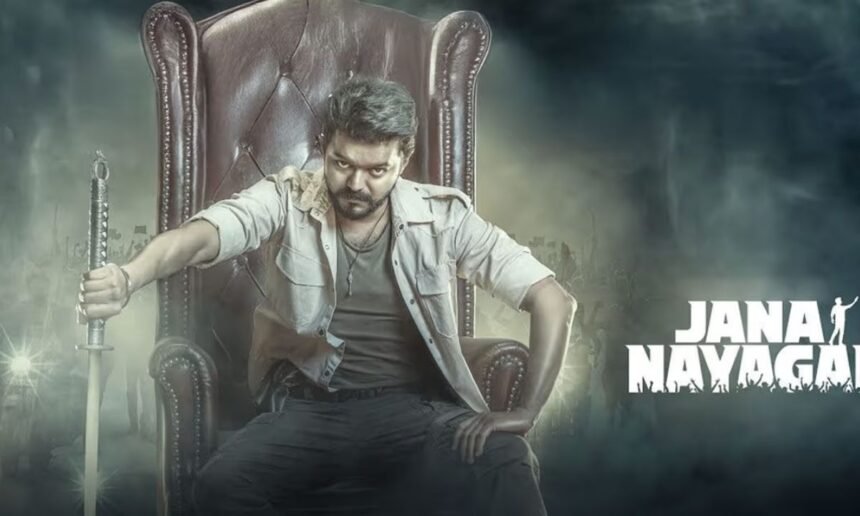
The Jana Nayagan censorship row has intensified, with the much-anticipated Tamil film now at the centre of a widening legal and industry debate over India’s film certification process. The controversy involves actor-turned-politician Vijay, the Central Board of Film Certification, and multiple courts, raising questions that extend well beyond a single release.
At the heart of the dispute is the delay in certifying Jana Nayagan, which has stalled its theatrical release and triggered legal challenges. The issue has drawn reactions from senior filmmakers and political figures, turning the film into a flashpoint in the broader conversation on creative freedom and regulatory oversight.
Court Proceedings and Release Uncertainty
The matter is currently under legal scrutiny after the Madras High Court ordered a stay on the film’s release following objections linked to its certification. The filmmakers, citing significant financial investment and mounting losses, have since approached the Supreme Court of India, seeking relief and a time-bound resolution.
According to submissions made in court, the production team has argued that prolonged uncertainty around certification undermines not only the film’s commercial prospects but also the livelihoods of hundreds of workers associated with the project. The legal battle has effectively put Jana Nayagan’s release on hold, with no confirmed new date.
CBFC Under Spotlight
The Jana Nayagan censorship row has once again placed the Central Board of Film Certification under intense public scrutiny. Filmmakers have questioned the lack of clear timelines and detailed written explanations for suggested cuts or delays, arguing that the absence of transparency creates unpredictability for the industry.
Comparisons have also been drawn with other recent releases that received certification with cuts, while Jana Nayagan remains entangled in litigation. This contrast has fuelled claims of inconsistency in the application of certification norms.
Kamal Haasan Calls for Systemic Reform
Veteran actor and politician Kamal Haasan has weighed in on the controversy, calling for a transparent, time-bound, and accountable film certification process. He has emphasised that cinema is a collective economic activity involving technicians, exhibitors, and small businesses, all of whom are affected when releases are delayed indefinitely.
Haasan has framed the issue as one of constitutional values, arguing that freedom of expression should be guided by reasoned regulation rather than opaque decision-making. His remarks have added political and cultural weight to the ongoing Jana Nayagan censorship row.
Industry Pushback and Ram Gopal Varma’s Remarks
Filmmaker Ram Gopal Varma has also entered the debate, describing India’s censorship framework as outdated in the context of a digital, hyper-connected world. He has argued that while films face strict scrutiny, vast amounts of unregulated content circulate freely online, making traditional censorship appear increasingly ineffective.
Varma’s comments reflect a broader frustration within the film fraternity, many of whom see Jana Nayagan as a symbol of deeper structural issues rather than an isolated dispute.
Why Jana Nayagan Matters Beyond One Film
For readers unfamiliar with the project, Jana Nayagan is widely viewed as a significant film in Vijay’s career, with political undertones that have attracted heightened attention. Its stalled release has therefore become a test case for how India balances artistic expression, political sensitivity, and regulatory authority.
Industry observers note that the outcome of this case could influence how future films navigate certification, particularly those engaging with social or political themes.
What Lies Ahead
As the legal process continues, the Jana Nayagan censorship row shows no immediate signs of resolution. With the Supreme Court now involved and prominent voices calling for reform, the controversy has evolved into a national conversation about the relevance and functioning of film censorship in India.
For now, Jana Nayagan remains unreleased, its fate tied to court rulings that may shape not only its own future but also the contours of creative freedom in Indian cinema.