Jab Khuli Kitaab Review: A Quiet Drama on Marriage and Truth
A reflective Hindi drama centred on ageing love and buried secrets has arrived on streaming platforms. Directed by Saurabh Shukla and led by veteran actors Pankaj Kapur and Dimple Kapadia, Jab Khuli Kitaab premiered on 6 March 2026 and is now streaming on ZEE5. The film explores what happens when a confession from the distant past suddenly disrupts a marriage that has lasted for more than half a century.
Unlike most contemporary romantic dramas that focus on youthful relationships, this story unfolds in the later years of life. It examines companionship that has endured decades, raising uncomfortable questions about trust, forgiveness and the quiet emotional negotiations that define long marriages. By placing senior characters at the centre of its narrative, the film attempts to explore the fragile balance between love and resentment when hidden truths finally surface.
Jab Khuli Kitaab Review: A Marriage Tested by a Long-Held Secret
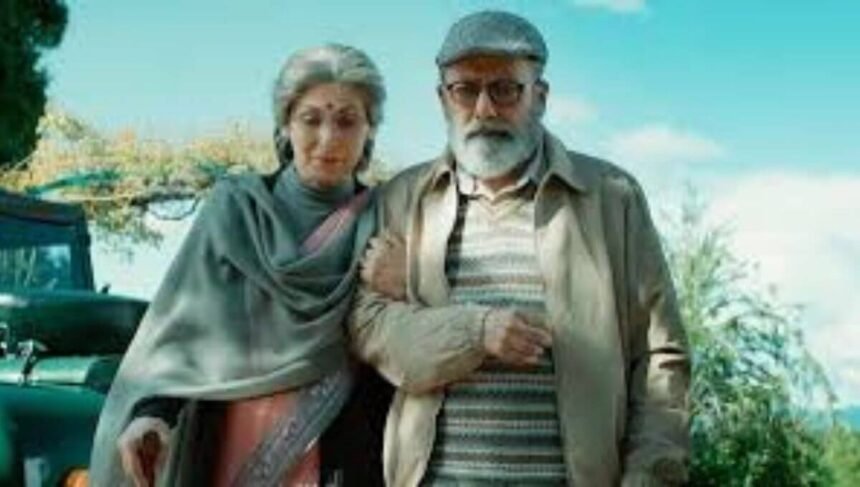
At the centre of this Jab Khuli Kitaab review is the relationship between Gopal Chandra Nautiyal and his wife Anusuya, a couple who have spent more than fifty years together. Their life appears stable and affectionate until an unexpected revelation disrupts the rhythm of their shared existence.
After emerging from a prolonged coma, Anusuya confesses to a mistake from the early years of their marriage. The admission, which she has carried silently for decades, shocks Gopal and forces him to reconsider everything he believed about their relationship. What once seemed like a secure and harmonious partnership suddenly begins to look uncertain. The emotional impact of the confession becomes the driving force of the film, pushing the couple into painful conversations and unexpected decisions.
The story gradually unfolds as Gopal struggles to reconcile the past with the life he thought he knew. The revelation leaves him questioning whether the decades they spent together were built on trust or illusion. For Anusuya, the confession becomes an act of emotional release, but it also exposes her to the possibility that honesty may come at the cost of losing the very relationship she hoped to protect.
Story and Themes: Love, Memory and the Weight of Time
A key strength highlighted in this Jab Khuli Kitaab review is the film’s exploration of how memory shapes long-term relationships. The narrative suggests that the past never completely disappears, even when it seems buried under years of routine and shared experiences. When Anusuya’s confession resurfaces, it disrupts the carefully maintained sense of stability that defines the couple’s marriage.
Through Gopal’s reaction, the film examines how fragile trust can be even after decades of companionship. His emotional journey moves through disbelief, anger and wounded pride before settling into a quieter phase of introspection. The film also asks whether a single moment from the distant past should carry the power to redefine an entire lifetime of shared memories.
At the same time, the narrative touches on the subtle dynamics of ageing relationships. Long marriages often evolve into companionship built on habit and familiarity rather than constant emotional expression. By introducing a sudden crisis into such a relationship, the film highlights how unresolved truths can quietly linger beneath the surface.
Performances Lead the Film’s Emotional Weight
Any discussion in this Jab Khuli Kitaab review inevitably returns to the performances of its lead actors. Pankaj Kapur delivers a restrained and nuanced portrayal of Gopal, capturing the emotional turmoil of a man who finds his carefully ordered life unexpectedly shaken. His performance moves gradually from confusion to indignation and eventually to vulnerability, reflecting the slow emotional shifts that occur as he confronts the reality of the situation.
Dimple Kapadia brings equal depth to the role of Anusuya. Her character carries a mixture of regret and quiet determination, and Kapadia portrays these emotions with controlled intensity. Rather than presenting Anusuya as a purely sympathetic or flawed figure, the film allows her to exist somewhere in between, as a person whose decision to confess is both courageous and complicated.
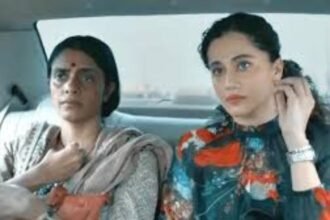
The supporting cast adds texture to the story. Aparshakti Khurana appears as Negi, a lawyer who becomes entangled in the couple’s domestic conflict, often providing moments of humour and awkward realism. Other family members, including the couple’s children and relatives, contribute to the emotional tension as they attempt to understand the sudden change in their parents’ relationship.
A Story Adapted from Theatre
Another defining feature of Jab Khuli Kitaab is its theatrical origin. Director Saurabh Shukla adapted the screenplay from his own stage play, and the influence of theatre is evident throughout the film’s structure. Much of the narrative unfolds through extended conversations and emotionally charged exchanges rather than visual spectacle or dramatic plot twists.
This approach creates an intimate atmosphere in which the characters’ feelings take centre stage. Scenes often linger on dialogue and facial expressions, allowing the audience to observe the gradual shifts in the couple’s emotional landscape. The result is a film that prioritises character interaction over narrative speed.
However, the theatrical style also means that the story unfolds in a relatively straightforward and predictable manner. The focus remains on the emotional consequences of the confession rather than on surprising developments in the plot.
Family Dynamics and Social Commentary
Beyond the central relationship, the film also examines how personal conflicts ripple through a family. Gopal and Anusuya initially attempt to hide their dispute from their children and relatives, hoping to shield them from the emotional fallout. Yet the tension gradually becomes impossible to conceal, and the family begins to sense that something has changed.
These interactions reveal the generational expectations surrounding marriage and separation. For the younger characters, the idea of divorce may appear practical or understandable, while for the older generation it carries deeper cultural and emotional implications. The film subtly reflects on these differing perspectives without turning the story into a heavy-handed social argument.
Through these family dynamics, the narrative expands beyond the couple’s personal crisis to explore how relationships are shaped by social expectations, cultural norms and the quiet pressures of family life.
Strengths and Limitations of the Film
As this Jab Khuli Kitaab review suggests, the film’s greatest strength lies in its performances and emotional sincerity. By focusing on an elderly couple navigating unresolved issues, the story offers a perspective rarely explored in mainstream Hindi cinema. The characters feel grounded in everyday reality, and the film allows their emotional struggles to unfold at a measured pace.
At the same time, the screenplay occasionally leans towards sentimentality. Certain scenes emphasise emotional reconciliation without fully exploring the psychological complexities behind the conflict. As a result, the narrative sometimes appears to move towards familiar resolutions rather than probing deeper into the motivations that shaped the characters’ choices.
Even so, the film’s sincerity prevents it from becoming overly melodramatic. The chemistry between Kapur and Kapadia anchors the story, ensuring that the emotional stakes remain believable even when the script follows predictable narrative beats.
Final Verdict
Ultimately, this Jab Khuli Kitaab review presents a film that favours quiet reflection over dramatic spectacle. It is a modest but thoughtful exploration of ageing love, regret and the endurance of companionship. By focusing on a couple who have spent decades together, the film reminds viewers that even the longest relationships can be reshaped by truths that surface unexpectedly.
While the story may unfold in a familiar manner at times, the strength of its performances and the emotional honesty of its central conflict give it a distinctive presence. Anchored by Pankaj Kapur and Dimple Kapadia, Jab Khuli Kitaab becomes less about a single confession and more about the complicated journey of understanding what it truly means to share a lifetime with another person.